I became a physical therapist because I saw something early in my career that stayed with me: caring, dedicated PTs who genuinely wanted to help their patients, but didn't have the tools or knowledge to make the impact they were capable of. That gap bothered me. I wanted to be the kind of clinician who could actually close it.
But before I was a clinician, I was a meathead bodybuilder. And like most meathead bodybuilders, I learned some lessons the hard way.
I was deadlifting 475 pounds with bands when I felt it — an immediate pop in my back. Within hours, numbness was shooting down my left leg. It stayed there for six weeks. The only position I could sleep in was lying on my stomach. Every other position was agony. So that's where I stayed. And somewhere in those weeks of pain, frustration, and experimentation, I noticed something: certain movements made it better. Others made it worse. The direction mattered.
That was my entry point into understanding how spinal movement affects symptoms — long before I ever set foot in a PT school. I was just a guy in pain trying to figure out what his body was telling him.
That experience never left me. It shaped how I treat back and neck pain today: through systematic movement assessment, repeated movements, and a directional approach to loading that most providers never consider. It's why I've built a large referral base in New York City treating complex back pain cases — people who stayed active but couldn't find relief anywhere else.
My formal path started with two degrees that gave me the framework to understand what I'd already lived. My MS in Health Promotion Management from American University grounded me in behavioral psychology — how people make decisions, what drives change, and what gets in the way. My DPT from Columbia University, where I graduated with Academic Honors, gave me the clinical foundation to put it all together.
Along the way I competed in three men's physique bodybuilding shows and won the last one, after which I jokingly retired. Training at that level taught me what it means to push through discomfort, manage pain intelligently, and keep moving when everything in you says stop. It also taught me where the line is — the difference between productive challenge and actual damage. I don't just understand pain from the outside. I've been in it.
That background shaped how I think about pain itself. The human body is a perfect machine — designed to coordinate its parts, maintain balance, and optimize performance. But it can't recognize its own imbalances and self-correct. Pain isn't the problem. It's a signal that something is out of balance. My job as a clinician has always been to find the imbalance, not just treat the symptom. That philosophy is built into everything this app does.
The clinical turning point came when I encountered blood flow restriction training while I was still competing. What struck me wasn't just the science. It was watching people build real strength at intensities they could actually tolerate. People who had stopped believing exercise was possible for them were training again. BFR gave caring clinicians the tool they'd been missing, and I saw a real opportunity to change how physical therapy was practiced.
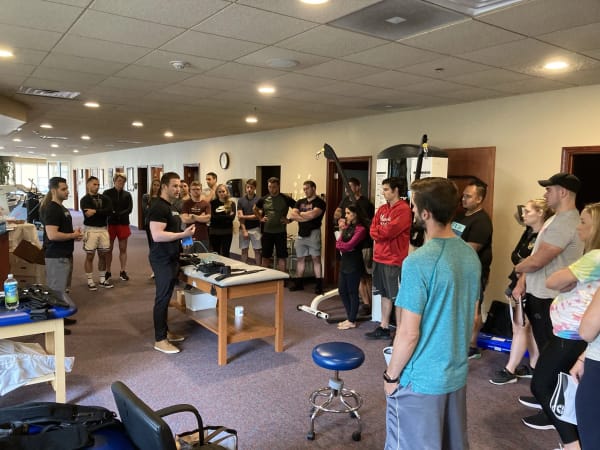
I've spent years since then researching BFR, publishing in the top peer-reviewed journals in exercise science and physical therapy, and speaking at the largest fitness and rehabilitation conferences in the world — ACSM, NSCA, and APTA's Combined Sections Meeting. I've trained thousands of clinicians and trainers across the US and Europe through The BFR Pros, helping shape how BFR is applied in rehabilitation clinics worldwide.
But the people who needed these tools most — managing pain at home, without a specialist nearby — still couldn't access them.
This app is my answer to that.