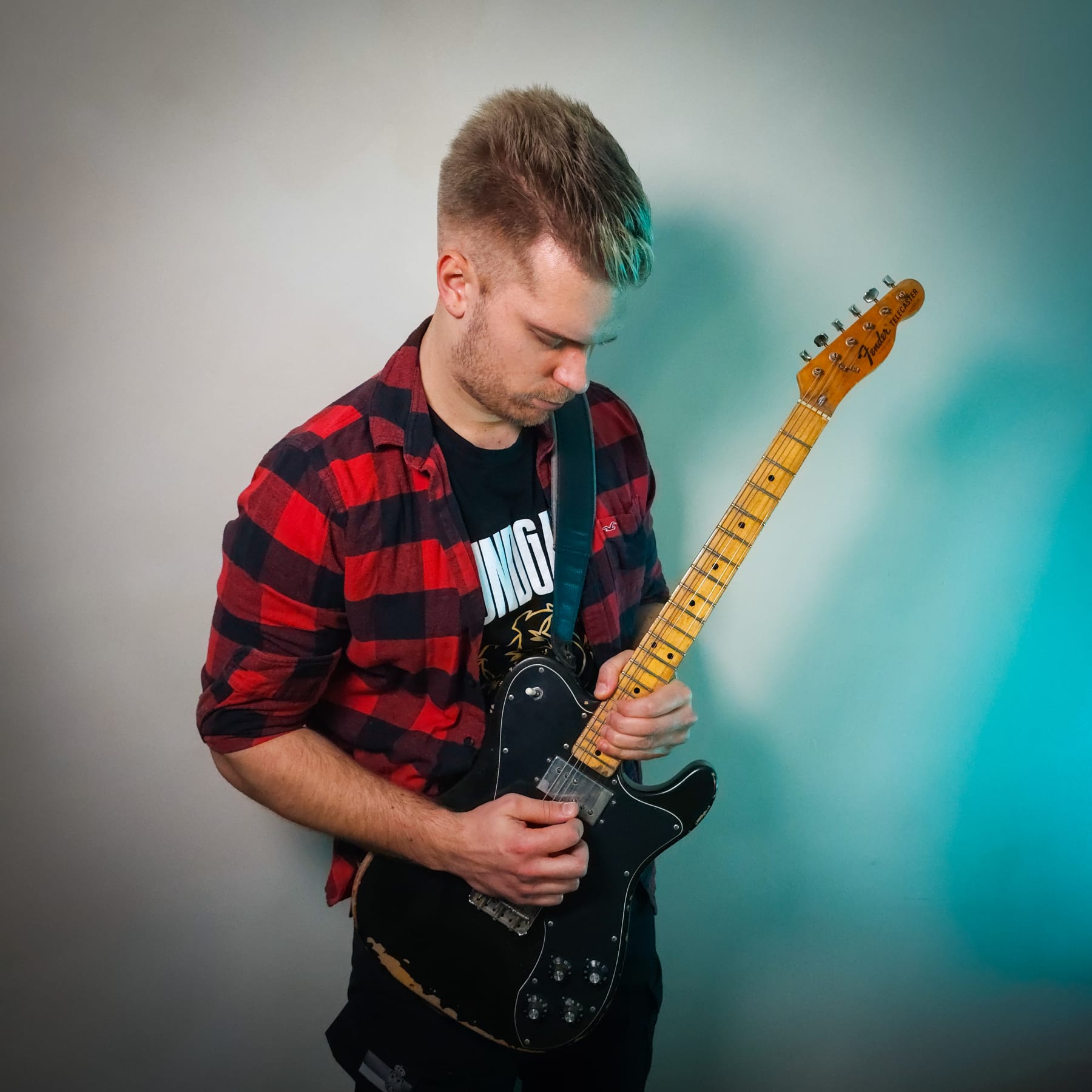
I build, modify and repair the amplifiers and pedals that every modeler is trying to copy — and I write the code that copies them. After thousands of them on my bench, I hear the same problems from modeler players over and over: presets that sound huge in headphones and fall apart through a PA, gain set from an EQ nobody looked at, cab simulation sent to a real cab, and players scrolling a thousand presets without knowing which control would fix the one they have.
I'm an engineer and a musician, so I care about both sides of the signal chain, and about both sides of the analog-digital divide. I design and repair analog circuits, and I write the DSP that models them — my own plugins, including ReactIR, which models the way a real speaker and amplifier interact rather than pretending an impulse response is the whole story. Knowing what a clipping stage does to a waveform and knowing what it feels like to lose your tone when the volume comes up are the same knowledge approached from two directions. That combination shapes everything I teach here: what your unit's controls are copying, and what to listen for when you move them.
All of it runs through Slightly Technical. The website carries technical articles and interactive tools you can play with — amp biasing, tone stacks, negative feedback, transistors, guitar electronics — so you can hear and see what a circuit does instead of taking my word for it. There's the podcast, courses like Overdrive Pedals Demystified, and the plugins. The thread through all of it is the same: clear explanations instead of mystique, gear hype, or one-size-fits-all presets.
A lot of that work is taking apart things everybody repeats. Tube versus transistor. Chorus before or after distortion. Whether an IR is a speaker. I test them on the bench and by ear, then tell you what actually happens and what it depends on — because the answer nearly always depends on what's feeding the stage, which is the part nobody mentions.
This app brings that approach into a day-by-day course built around your unit, your outputs and the music you play. You won't just memorise a preset. You'll learn what each block is doing, how EQ behaves before and after the modelled clipping, why the same preset sounds different through an FRFR and a real cab, and how to carry a sound from your room to a stage, a recording and a clip. My hope is that this app helps you trust your ears, build presets you can explain, and become a more capable guitarist and a better-informed audio engineer.